
Chargebacks: What They Actually Cost UK Businesses
Most businesses only budget for the chargeback fee. But once operational costs, lost goods, and potential wider consequences are included, the total cost of a dispute can be considerably higher than the chargeback fee alone.
A chargeback happens when a customer asks their card provider to reverse a payment. Some industry estimates suggest the total cost can exceed the original transaction value once fees, staff time, lost goods and administrative work are included. Pay by Bank does not use the card-scheme chargeback process because no card network is involved, though businesses must still manage refunds, complaints, and other payment-related issues appropriately.
The Fee Is the Smallest Part of the Bill
Ask a business owner what a chargeback costs, and they will usually mention the fee. Depending on the payment provider, a business may be charged a dispute fee in addition to the disputed payment and its associated costs. The fee is an immediate and visible cost, but it may not be the largest expense associated with managing the dispute.
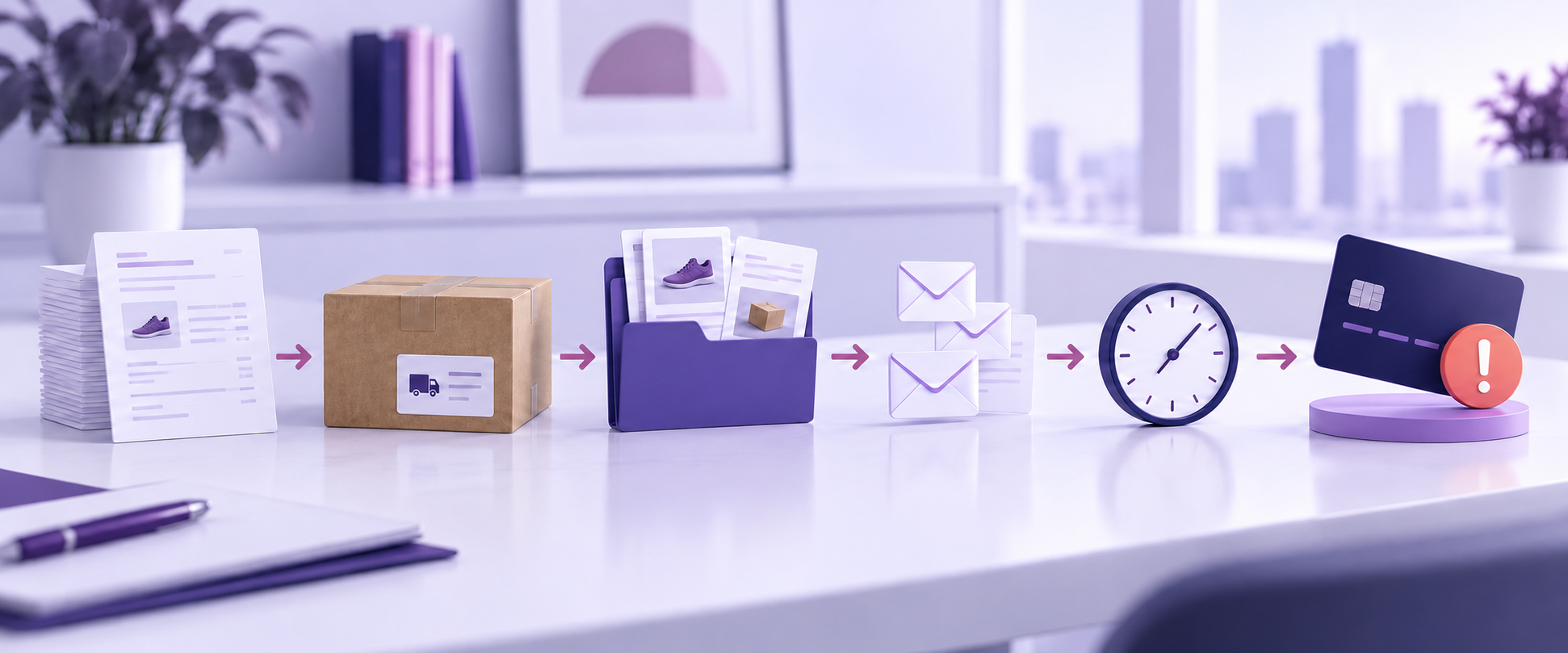
A chargeback triggers a formal dispute process. Evidence must be gathered, deadlines met, and responses submitted, all of which consume internal resource regardless of the outcome. These operational costs do not appear on the fee schedule, but they are real.
This hypothetical example assumes the business loses the sale and goods and spends 1 to 2 hours managing the case. Actual costs will depend on the provider, staff costs, margins, and the outcome of the dispute.
The total cost can sometimes reach several times the transaction value, particularly when goods have already been supplied and significant staff time is required. However, there is no single multiplier that applies to every business or dispute.
The fee is just the tip of the iceberg. In the payments industry, chargeback costs are widely recognised as running well beyond the initial fee, into operational overhead, lost goods, and margin erosion that rarely appear in a business’s cost tracking.
The Five Hidden Costs
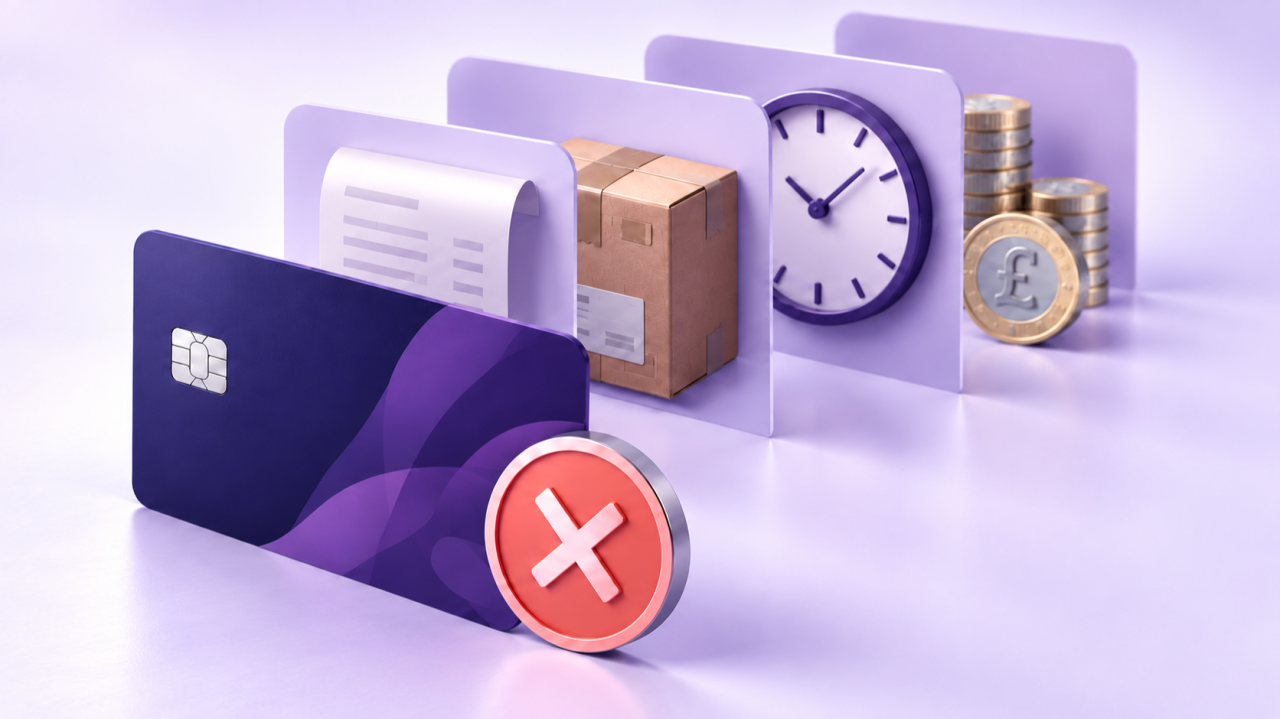
In the payments industry, chargebacks are frequently associated with hidden costs, a term used to describe the significant expenses beyond the visible dispute fee that most businesses never formally account for. Industry analysis consistently finds that when these are included, the total cost of a chargeback runs considerably higher than the headline figure. Here are the five most common.
The chargeback fee itself
Your processor may charge this for handling the dispute, often in the region of £15 to £25. Whether it is returned if you win depends on your payment provider and contract. This is the only cost most businesses actually track.
Staff time gathering evidence
Someone has to find the order, the delivery proof, and any messages with the customer, then write it all up before a deadline. For a small team, that is an hour or more taken away from everything else, for every dispute.
The lost goods or service
If you lose the dispute, the business may lose both the payment and the cost of providing the goods or service, if these were already delivered.
Scheme penalties at higher volumes
A consistently high level of disputes may lead to additional monitoring, fees, or other measures under the relevant card scheme and acquirer rules.
The administrative drag
Someone also has to keep track of deadlines and paperwork across all your disputes, not just one. This ongoing work rarely gets costed, but it is real, repeated staff time.
Together, these costs can make a chargeback considerably more expensive than the visible dispute fee, particularly when goods have already been delivered.
How Chargeback Ratios Damage Your Acquirer Relationship
One chargeback is just a cost. Lots of chargebacks become a bigger problem: card companies start to see your business as risky.
Visa and Mastercard both track what percentage of your payments end in a dispute. This is called your chargeback ratio. Card schemes and acquirers, the banks or companies that process your card payments, monitor this using their own criteria. The applicable thresholds and calculation methods can vary by scheme, programme, merchant category, and time period, so it is worth confirming current requirements directly with your payment provider.
Depending on the severity and duration of the issue, possible consequences may include closer monitoring, additional fees, a reserve requirement (where a percentage of your takings is held back as a safety net), or, in serious cases, termination of the merchant account. This can happen even where individual disputes were not the business’s fault. A high ratio can be treated as a risk signal in its own right.
This is the part many businesses do not realise: the effect is not limited to the disputed payments themselves. A high chargeback ratio can potentially raise your fees on future payments, or put your ability to take card payments at risk.
“Chargeback monitoring focuses on the number and proportion of disputes associated with a merchant. A high level of disputes can create operational and financial consequences, regardless of the circumstances behind each individual case.”
Why Pay by Bank Has No Chargeback Model
Chargebacks exist because of how card payments work. When you pay by card, the card network moves the money on your behalf, and it also gives you a formal way to reverse that payment later if something goes wrong. The business often only finds out once the money has already been taken back.
Pay by Bank works differently. The customer authorises an account-to-account payment through their own banking app, and the payment is sent to the business without passing through a card network. Because no card network is involved, the traditional card-scheme chargeback process does not apply.
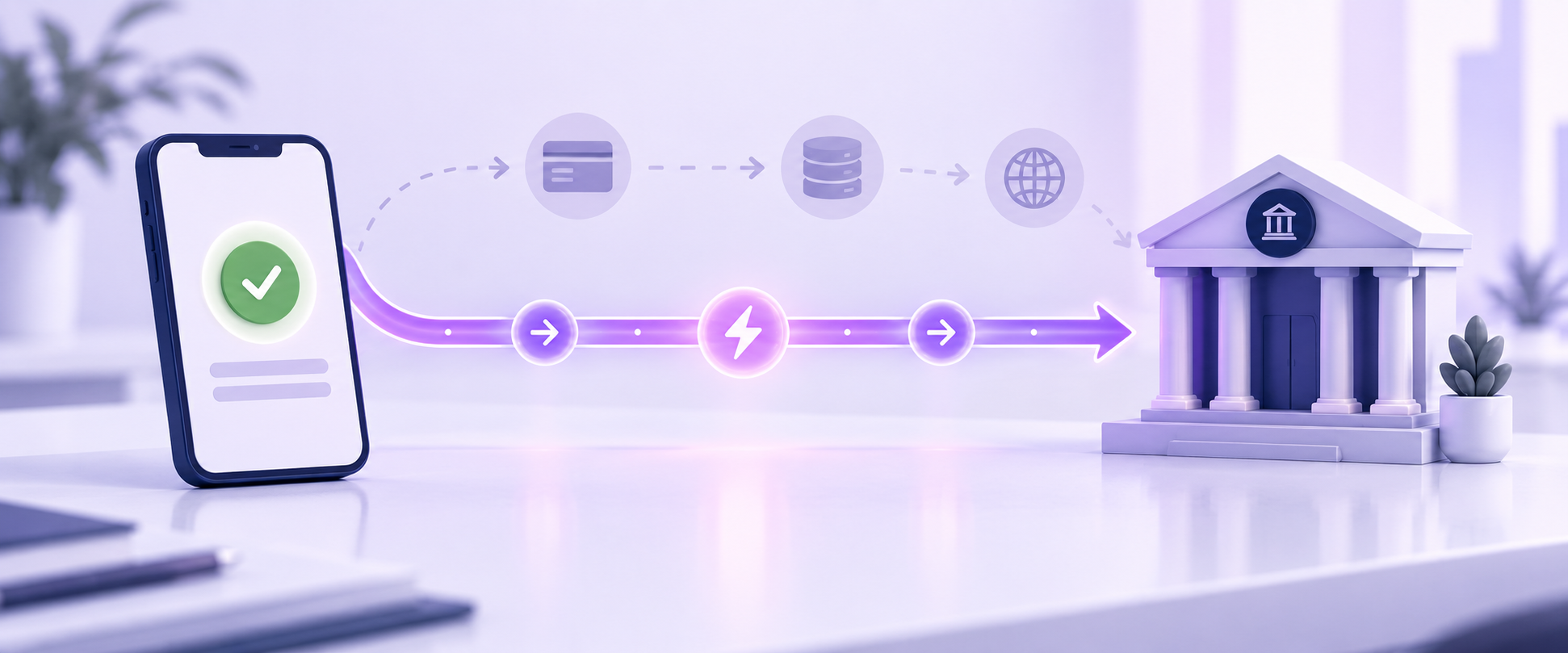
This does not mean problems never happen. A customer can still be unhappy, or still be owed money back. If a refund is appropriate, the business handles it outside the card-scheme chargeback process. This means the payment does not contribute to a card chargeback ratio, although the business must still follow its own refund, complaints, and legal obligations.
If you have been quietly paying the five hidden costs above, this difference matters. It removes exposure to the traditional card-scheme chargeback process, although other forms of payment risk, fraud, complaints, and refund administration can still remain.
How SSV SmartPay Works for Businesses
SSV SmartPay is a Pay by Bank platform that helps UK businesses accept secure account-to-account payments alongside their existing payment methods. Customers authorise each payment through their own banking app, without entering card details or requiring the business to use a card machine. Payments are typically received within seconds over the Faster Payments network, although occasional bank-related delays can occur.
QR-code payments
Display a QR code in person or on an invoice. The customer scans it with their phone and approves the payment in their banking app.
Payment links
Send a secure payment link by email, SMS or messaging app, giving customers a simple way to pay remotely.
Online checkout
Add Pay by Bank to an ecommerce checkout, including WooCommerce, so customers can pay directly from their bank account.
Simple, transparent pricing. SSV SmartPay charges 20p for payments under £50 and 0.5% for payments above £50, with no monthly fee, long-term contract or card-machine rental. Because these are account-to-account payments, the traditional card-scheme chargeback process does not apply; businesses must still handle appropriate refunds, complaints and other payment risks.
Industries More Exposed to Chargebacks
Some types of business are far more exposed to chargebacks than others. It usually comes down to two things: how long the gap is between payment and delivery, and how easy it is to dispute the payment afterwards.
| Sector | Why it is exposed |
|---|---|
| Ecommerce & retail delivery | Card-not-present by default; delivery delays and “item not received” disputes can create additional exposure |
| Subscriptions & memberships | Recurring billing means a forgotten cancellation often turns into a dispute instead of a call to support |
| Travel & event ticketing | High-value, long lead time between booking and the event, and disruption (cancellations, delays) triggers disputes at scale |
| Digital goods & services | Nothing physical to point to as proof of delivery, and low marginal cost makes “friendly fraud” disputes more tempting |
| Any card-not-present business | Structurally higher chargeback risk than in-person, chip-and-PIN, or Pay by Bank transactions, regardless of sector |
The common problem is distance: a time gap between paying and receiving, and a gap between the payment and proof that it was genuinely approved. Pay by Bank can reduce some card-related risks by requiring the customer to authorise the payment through their banking app, though it does not eliminate every type of fraud, complaint, or refund request. No card details are entered or stored as part of the transaction, and the payment is not subject to the traditional card chargeback process.
For a subscription business processing thousands of payments each month, even a relatively small proportion of chargebacks can create recurring costs and substantial administrative work.
Frequently Asked Questions
How much does a chargeback really cost a UK business?
The fee, often £15 to £25, is usually the smallest part. Add staff time, lost goods, possible penalties, and the effect on your chargeback ratio, and the real cost is usually two to three times the original payment.
What are the hidden costs of a chargeback?
Five things: the chargeback fee, the staff time spent responding, the goods or service you lose if you lose the dispute, extra fees if your dispute rate gets too high, and the ongoing admin of managing several disputes at once.
How do chargebacks affect a merchant’s relationship with their acquirer?
Card companies watch what percentage of your payments end in disputes. Go above a certain level and your acquirer, the company that processes your card payments, may raise your fees, hold back some of your money as a safety net, or ask you to fix the problem. If it keeps happening, they can close your account.
Does Pay by Bank have chargebacks?
Pay by Bank payments are not subject to the traditional card-scheme chargeback process because no card network is involved. However, customers may still request refunds or raise complaints, and other protections or recovery processes may apply depending on the circumstances.
Which industries lose the most to chargebacks?
Businesses with slow delivery, subscriptions, or higher fraud risk tend to see the most chargebacks. This includes online retail, subscriptions and memberships, travel and event tickets, and digital products. Any business taking card payments online carries more risk than one taking payments face to face.
Continue exploring SSV SmartPay
References
- Financial Conduct Authority. Strong Customer Authentication. Available at: https://www.fca.org.uk/firms/strong-customer-authentication
- Pay.UK. Faster Payment System: how it works. Available at: https://www.wearepay.uk/what-we-do/payment-systems/faster-payment-system/
- Mastercard. Rules and compliance programmes. Available at: https://www.mastercard.com/global/en/business/support/rules.html
Important information
Figures are illustrative, not verified statistics. Specific numbers in this article, including chargeback fee ranges, cost multipliers, and ratio thresholds, are presented as general estimates and industry discussion points rather than figures confirmed against a specific card scheme, acquirer, or research source. Chargeback fees, thresholds, and monitoring programmes vary by card scheme, acquirer, and merchant category, and are updated periodically. Confirm current rules and figures directly with your payment provider, and with the relevant card scheme, before relying on them for financial or compliance decisions.
Not financial or legal advice. This article is general information for UK businesses and does not constitute financial, legal, or tax advice. If you are managing an active dispute or a rising chargeback ratio, speak to your acquirer or payment provider directly.
Settlement speed. Pay by Bank payments are typically near-instant over the Faster Payments rails, but in rare cases settlement can take longer depending on the customer’s bank.
Scope of this article. References to Pay by Bank not being subject to card-scheme chargebacks describe the absence of that specific mechanism only. They do not mean a business is free from refund obligations, payment complaints, fraud risk, or other legal and regulatory requirements, which continue to apply regardless of payment method.
SSV SmartPay terms. Full pricing, terms, and conditions are available at ssvsmartpay.co/our-pricing. SSV SmartPay Limited is registered in England and Wales (CRN 15424021). SSV SmartPay is not directly FCA-regulated; payment initiation services are provided by FCA-authorised Payment Institution partners.
T&Cs Applied

Leave card-scheme chargebacks behind
SSV SmartPay runs on Pay by Bank, which is not subject to the card-scheme chargeback process. Sign up in minutes, typically approved within 24 hours, with no monthly fees.
Start free trial Book a demo Or get in touch with the team →Frequently Asked Questions
How much does a chargeback really cost a UK business?
The dispute fee, often in the region of £15 to £25, is usually the smallest part. Once operational costs, lost goods, possible scheme consequences and the administrative work of managing a dispute are included, the total can be considerably higher than the visible fee alone.
What are the hidden costs of a chargeback?
Five factors commonly contribute: the dispute fee itself, the operational costs of gathering evidence and responding, the goods or service already delivered if the dispute is upheld, potential consequences from card schemes if your dispute rate climbs too high, and the ongoing administrative drag of managing multiple disputes at once.
How do chargebacks affect a merchant's relationship with their acquirer?
Card schemes and acquirers monitor what percentage of your payments end in disputes. A consistently high level can lead to closer monitoring, additional fees, a reserve requirement where a percentage of your takings is held back, or in serious cases the termination of your merchant account — even where individual disputes were not your fault.
Does Pay by Bank have chargebacks?
Pay by Bank payments are not subject to the traditional card-scheme chargeback process because no card network is involved. Customers may still request refunds or raise complaints, and other protections or recovery processes may apply depending on the circumstances.
Which industries are most exposed to chargebacks?
Businesses with delayed delivery, subscription billing or higher fraud exposure tend to see the most disputes — including online retail and ecommerce, subscription and membership services, travel and event ticketing, and digital products. Any business taking card payments online carries more exposure than one taking payments face to face.
What is a chargeback ratio and why does it matter?
Your chargeback ratio is the percentage of your transactions that end in a dispute. Card schemes and acquirers track this using their own criteria, and a persistently high ratio can affect your processing fees, your standing with your acquirer, and ultimately your ability to take card payments at all.